
The Salt Pans of Trapani, where time is reflected in the water.
A horizon of light, wind, and silence that tells the most authentic soul of Sicily.
The Salt Pans of Trapani: history, landscape and millennia-old culture between sea and wind
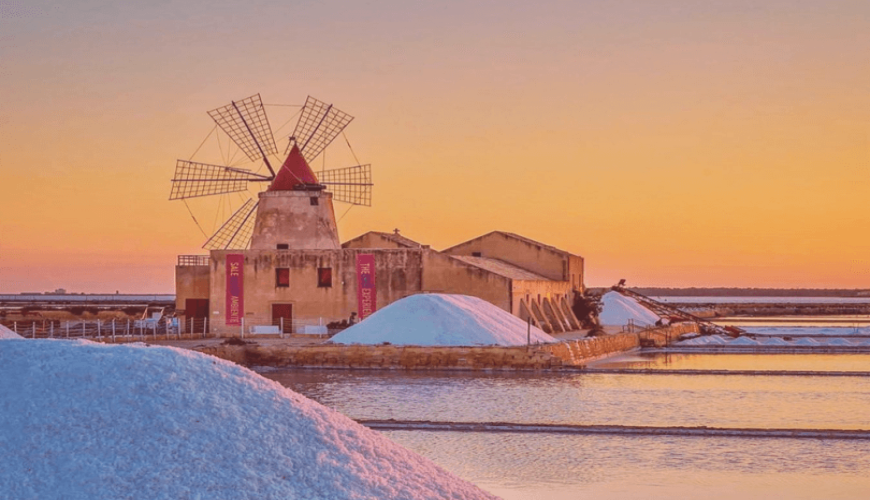
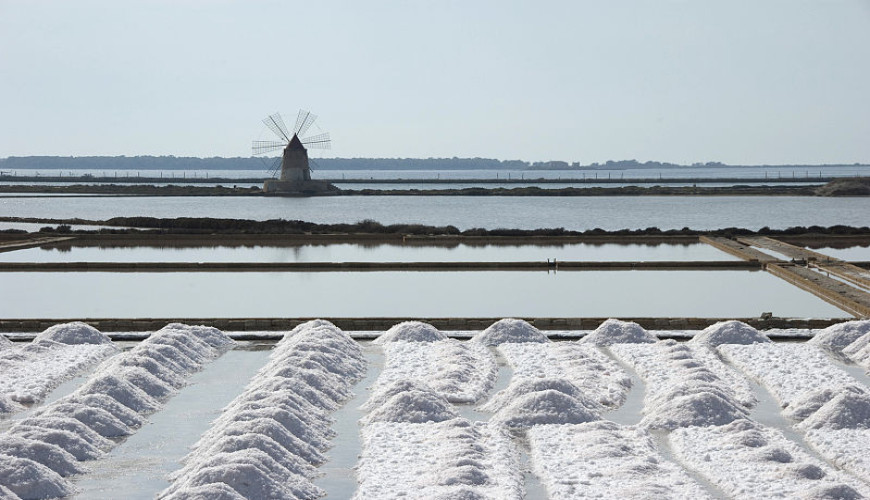
The Trapani and Paceco Salt Pans represent one of the most iconic and fascinating landscapes of western Sicily. Here, between sea, sky and wind, humans have shaped the land for centuries, creating a perfect balance between productive activity and nature. Today, the salt pans are not only a place of work, but a historical, cultural and environmental heritage of inestimable value.
A unique landscape in the heart of the Mediterranean
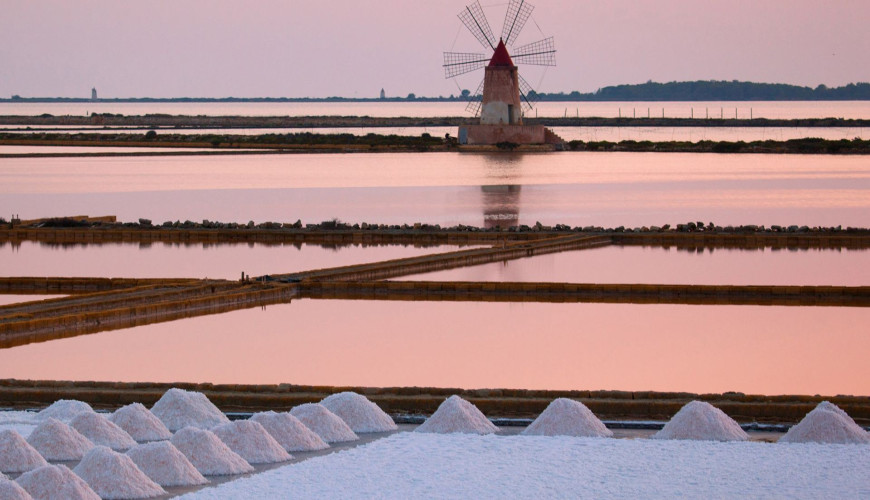
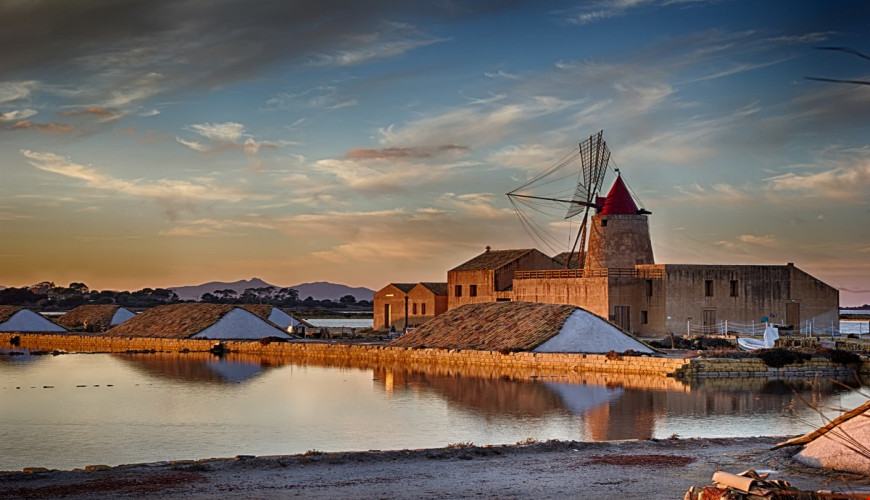
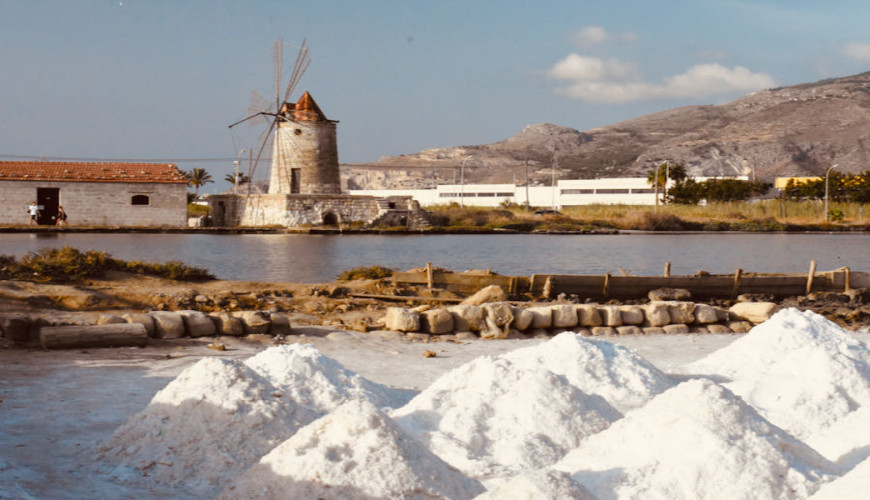
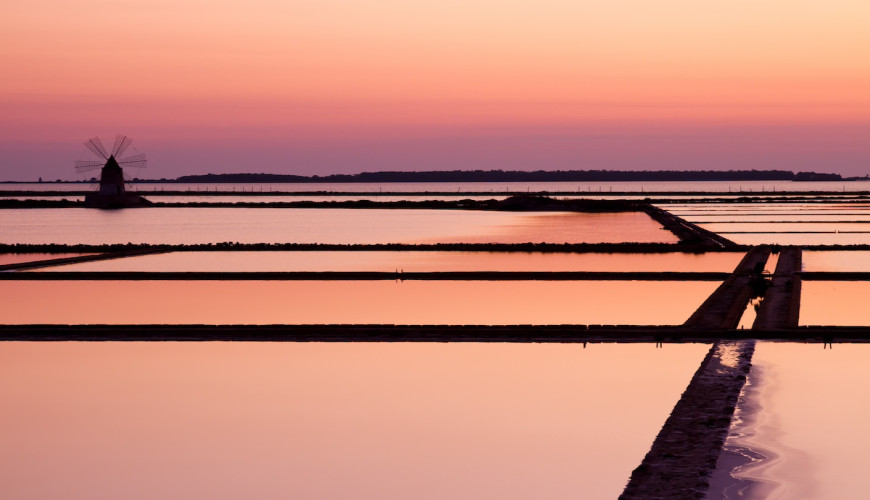
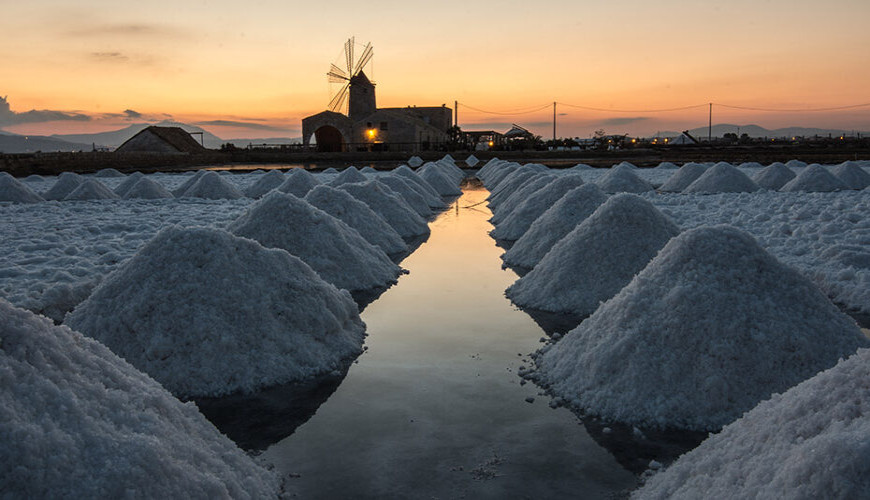
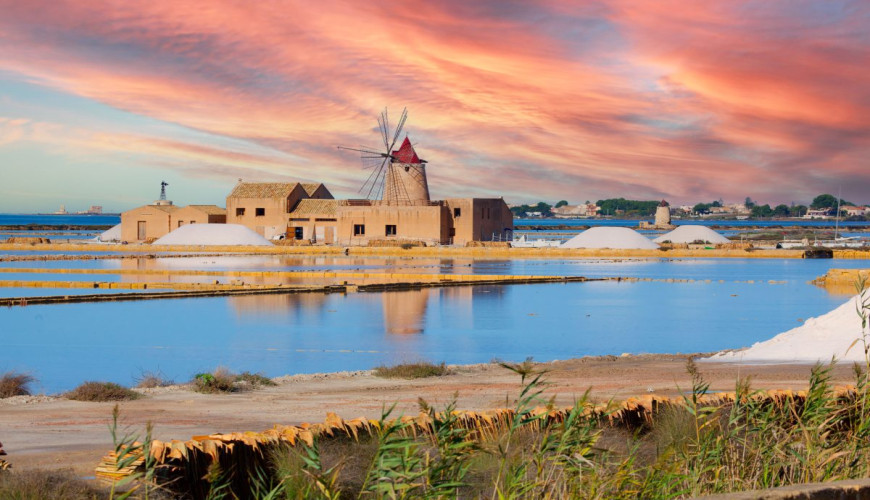
Water basins reflecting the sky, windmills, mountains of salt shining in the sun and sunsets with intense colors: the salt pans offer a natural spectacle that changes with the seasons and the light of day. This area, now protected as a Oriented Nature Reserve, is also an important habitat for numerous species of migratory birds, including pink flamingos.
The ancient origins of the Trapani salt pans
The history of the Trapani salt pans has its roots in antiquity. As early as Phoenician and Roman times, salt production was considered a strategic activity. Salt was not only a seasoning, but a precious commodity used for food preservation, trade, and even as a form of payment.
Thanks to its geographical position, Trapani soon became one of the main centers of salt production and trade in the Mediterranean.
The role of the Arabs and the development of the salt pans
It was above all the Arabs, between the 9th and 11th centuries, who perfected the system of salt extraction. They introduced advanced techniques for channeling seawater and dividing the basins, skillfully exploiting the sun and the wind.
This method, based on natural evaporation, has remained almost unchanged to this day and represents one of the most extraordinary examples of productive continuity in Mediterranean history.
Windmills: the symbol of the salt pans
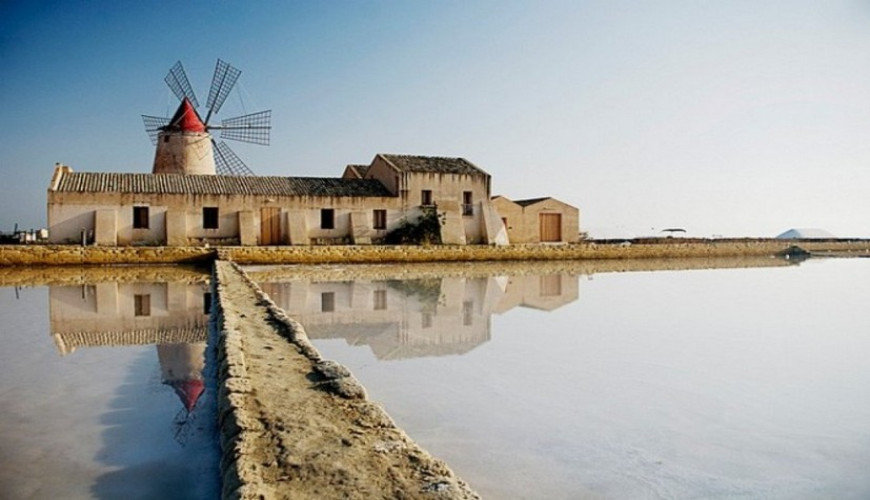
The windmills have become over time the very symbol of the salt pans. Each mill had a specific function: some were used to lift water, others to grind salt. Their presence tells the story of human ingenuity and the ability to adapt to the natural conditions of the land.
Today, restored and enhanced, they represent one of the most photographed views of western Sicily.
The salt pans today: tradition, nature and tourism
Today, salt production continues according to traditional methods, alongside a strong commitment to environmental protection and tourism promotion. The Salt Museum, located inside an ancient mill, allows visitors to understand the history, tools and hard work associated with this millennia-old activity.
The salt pans are also an ideal destination for walks, guided tours, photographic routes and moments of contemplation, especially at sunset.
A heritage to experience and preserve
The Trapani and Paceco Salt Pans are not only a place of extraordinary historical and scenic value, but also one of the most important coastal ecosystems in Sicily. This environment, shaped by humans over the centuries, is today an Oriented Nature Reserve and represents a delicate balance between traditional activities and biodiversity protection.
The fauna of the Trapani Salt Pans
The salt pans are a fundamental habitat for birdlife, especially for migratory birds that use this area as a resting, feeding and nesting zone along the routes between Europe and Africa.
Among the most representative species we find:
Pink flamingo – symbol of the reserve, present mainly in spring and autumn
Avocet – easily recognizable by its upward-curving beak
Black-winged stilt – an elegant bird with long red legs
Herons (grey heron, great white egret, cattle egret)
Little egrets and spoonbills
Terns and gulls
Marsh harrier, observable during migration periods
In addition to birds, the salt pans are also home to reptiles, amphibians and small mammals adapted to an environment characterized by high salinity and scarce freshwater.
The flora of the Trapani Salt Pans
The vegetation of the salt pans is mainly composed of halophytic plants, species capable of living in salt-rich soils subject to strong evaporation.
The most common species include:
Salicornia – a symbolic plant of brackish areas, with green and reddish hues
Salsola and Suaeda – shrubs resistant to salinity
Limonium – known for its small purplish flowers
Artemisia maritima
Rushes and reeds in areas with lower salt concentration
These plants play a fundamental role in soil stabilization, erosion protection and maintaining the ecological balance of the area.
An ecosystem to protect
The uniqueness of the Trapani Salt Pans lies precisely in the coexistence of traditional human activity and protected nature. Salt production, when carried out according to historical methods, contributes to maintaining the habitat and promoting biodiversity.
For this reason, it is essential to:
respect marked paths
not disturb wildlife, especially during nesting periods
observe nature in silence
Nature, silence and authentic beauty
Visiting the Trapani Salt Pans means entering a world made of delicate balances, changing colors and silent life. Flamingos reflected in the water, plants that resist salt and wind, skies that change with the light: everything contributes to making this place one of the most fascinating in western Sicily.
The 10 things to see at the Trapani Salt Pans
The Trapani and Paceco Salt Pans offer a unique experience combining nature, history and breathtaking landscapes. Here are the 10 must-see highlights to discover this iconic place in western Sicily.
1. Historic windmills
A symbol of the salt pans, the windmills tell centuries of labor and human ingenuity. Some were used to grind salt, others to pump water between the basins.
2. The Salt Museum
Housed in a restored ancient mill, the Salt Museum allows visitors to learn about the tools, techniques and traditions related to Trapani salt production.
3. Evaporation basins
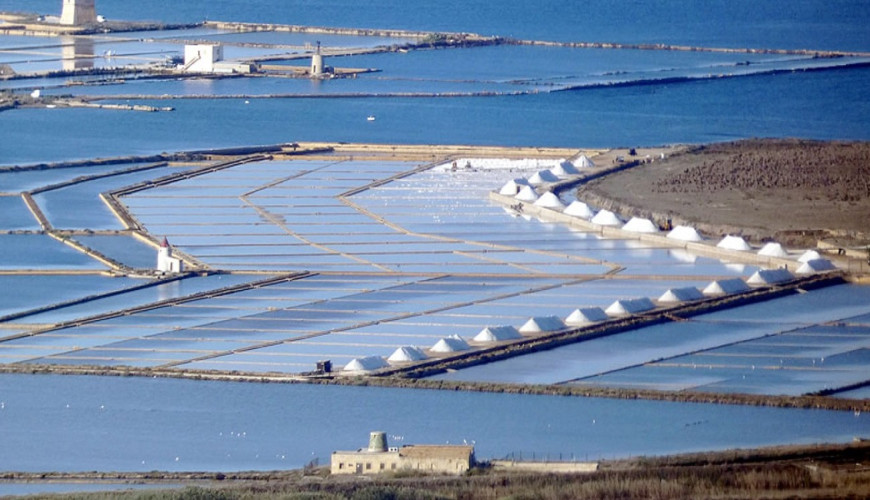
The heart of the salt pans: a sequence of water basins reflecting the sky and changing color throughout the day, creating an ever-changing landscape.
4. Sunset over the salt pans
One of the most spectacular sunsets in Sicily. The warm light of the setting sun illuminates salt, water and windmills, creating unforgettable atmospheres.
5. The Oriented Nature Reserve
The salt pans are part of a protected natural reserve, an ideal habitat for numerous species of migratory birds and halophytic plants.
6. Pink flamingos
With a bit of luck, it is possible to observe pink flamingos, symbols of the reserve’s biodiversity, especially in spring and autumn.
7. Nature trails
Simple, flat paths allow visitors to explore the salt pans on foot or by bicycle, immersed in silence and nature.
8. Reflections and water colors
Variations in salinity create unique shades, from blue to pink, making every view perfect for photography.
9. Views toward Erice and the sea
From the salt pans, evocative views open up with Erice in the background, the sea and the Egadi Islands on the horizon.
10. The salt tradition
Observing (when possible) the stages of salt harvesting means coming into contact with a millennia-old tradition that is still alive.
The 10 things to eat near the Trapani Salt Pans
Visiting the Trapani Salt Pans also means discovering a cuisine deeply connected to the sea, salt and the traditions of western Sicily. In the surrounding areas—between Trapani, Paceco, Nubia and Custonaci—you can taste authentic dishes that tell the story of the land.
1. Fish couscous
2. Busiate with Trapani pesto
3. Bluefin tuna
4. Fried fish
5. Pane cunzato
6. Tuna bottarga
7. Trapani sea salt PGI
8. Local cheeses
9. Sicilian cannoli
10. Sicilian granita
Useful tips for visiting the Trapani Salt Pans with TDS Servizi Turistici
The Trapani and Paceco Salt Pans are a unique place where nature, history and tradition blend into a striking landscape between the sea and windmills. To make the most of this experience, TDS Servizi Turistici recommends planning your visit carefully and choosing the most comfortable solutions suited to your needs.
1. Choose the right time
The best time to visit the salt pans is in the late afternoon, when the light becomes warm and reflections on the water create spectacular scenery. Sunset is undoubtedly the most evocative moment, ideal for photography and relaxing walks.
2. Travel in total comfort with TDS Transfer
The salt pans are located between Trapani and Paceco and are not always easily accessible by public transport. With TDS Transfer (NCC service), you can reach the salt pans from hotels, airports or other locations in Sicily punctually, avoiding traffic and parking issues.
3. Consider car rental with TDS Rent
If you want greater freedom of movement, TDS Rent offers the ideal car rental solution to visit the salt pans at your own pace and combine the stop with other destinations such as Erice, Trapani’s historic center or the coast.
4. Wear comfortable clothing
The route runs along dirt roads and walkways: comfortable shoes, a hat and sunglasses are recommended in summer. In the evening, especially at sunset, it can be windy—bring a light jacket.
5. Respect the natural environment
The Salt Pans are part of a Protected Natural Reserve. It is important to follow marked paths, not disturb wildlife (especially migratory birds) and respect the silence of the place.
6. Visit the Salt Museum
To truly understand the history and value of the salt pans, TDS recommends a stop at the Salt Museum, housed in an ancient windmill. Here you can discover tools, techniques and stories related to salt production.
7. Combine your visit with a personalized itinerary
With TDS Servizi Turistici, you can create a tailor-made itinerary, combining the visit to the salt pans with other destinations in western Sicily: Erice, Custonaci, Trapani historic center or a seaside dinner at sunset.
The TDS experience
By relying on TDS Servizi Turistici, visiting the Trapani Salt Pans becomes a complete and stress-free experience, thanks to:
private NCC transfers
reliable car rental
custom itineraries
local assistance and expertise
The Trapani Salt Pans are a place to be experienced calmly and respectfully: with TDS, every detail is designed to help you fully enjoy one of the most fascinating landscapes in western Sicily.
If you want to rent a car at Palermo, Catania or Trapani-Birgi airport, or anywhere else in Sicily where you are, click this link https://www.tdsrent.it
If you want to book a transfer from one of the main airports or from anywhere in Sicily where you are, click here https://www.tdstransfer.it