
Agrigento, the Valley of the Temples: the Soul of Ancient Akragas
A millennial journey through the Doric temples that tell the glory of Magna Graecia

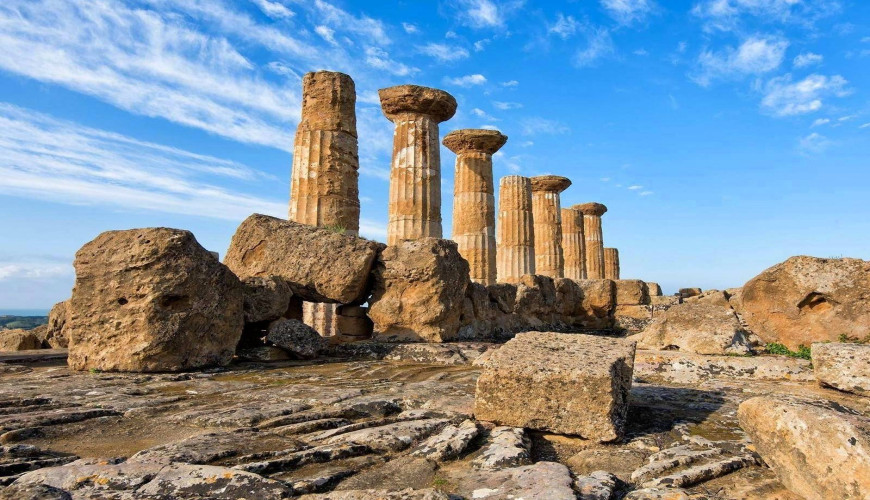
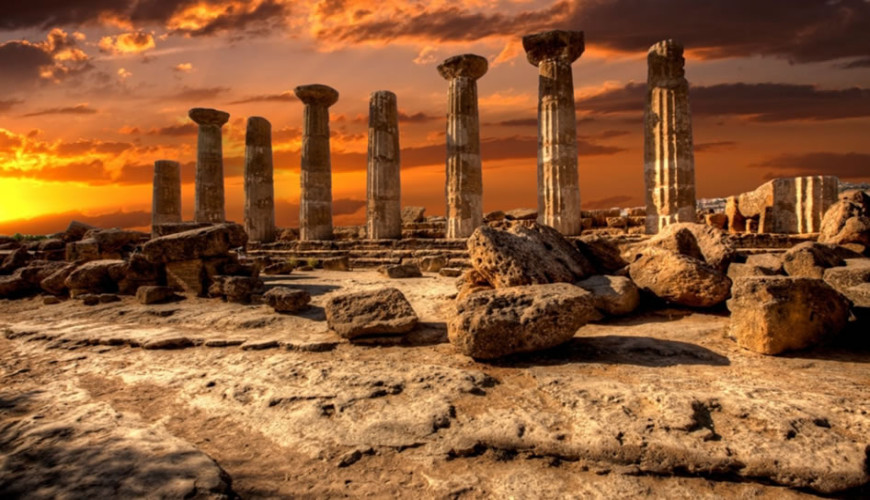
Valley of the Temples in Agrigento
What is the Valley of the Temples
The Valley of the Temples is located in Agrigento, the ancient Greek colony of Akragas founded in the 6th century BC.
It is considered the largest archaeological park in Europe and one of the most important in the Mediterranean. The site has been a UNESCO World Heritage Site since 1997 for its extraordinary preservation and the historical and cultural significance of the Greek temples. Despite its name, the Valley of the Temples extends over a rocky ridge overlooking the surrounding landscape and the sea.
Main Temples and Monuments
The Valley of the Temples hosts numerous Greek temples, some Roman ruins, and ancient necropolises.
The main temples include:
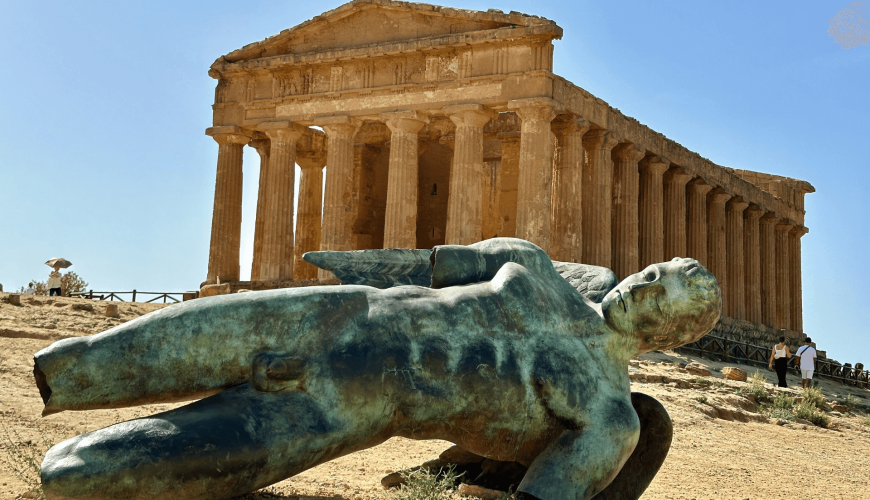
Temple of Concordia: one of the best-preserved Doric temples in the world, built in the 5th century BC.
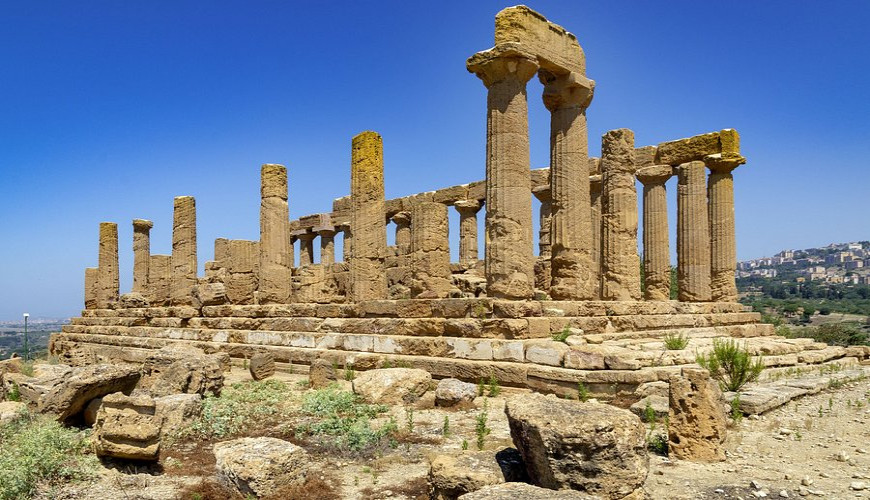
Temple of Juno (Hera): located at the highest point of the ridge, dating back to 450 BC, still partly preserved.
Temple of Hercules (Heracles): the oldest in the Valley, from the 6th century BC, with only a few columns remaining today.
Temple of Olympian Zeus: monumental, built to celebrate Akragas’ victory over Carthage; today, large ruins and remains of the telamons survive.
Temple of the Dioscuri (Castor and Pollux): a modern symbol of Agrigento, with four columns still standing.
Temple of Vulcan: once imposing, now heavily deteriorated.
Temple of Asclepius: a place of therapeutic worship, located at the edges of the Valley.
In addition to temples, the site includes Greek and Roman necropolises, districts of ancient Akragas, and funerary monuments such as the Tomb of Theron. The Garden of the Kolymbethra represents a natural oasis with olive trees, citrus, palm trees, and typical Sicilian flora.
History of the Valley of the Temples
Akragas reached its peak in the 5th century BC, during which many of the temples visible today were built. In 480 BC, the city won the Battle of Himera against Carthage, celebrated with the construction of the Temple of Zeus. In 406 BC, the Carthaginians conquered and destroyed Akragas, marking the end of its golden age. With the Roman conquest, the city became Agrigentum, while some areas were abandoned or repurposed. Only from the 19th century did systematic excavations begin, leading to the rediscovery and enhancement of the Valley of the Temples.
Origins: Foundation of Akragas and Birth of the City
Akragas was founded around 580 BC (some sources say 582 BC) by settlers from nearby Gela and populations from Rhodes (or Crete/Rhodes), led by the founders Aristonous and Pistilos.
The chosen location was strategic: a plateau protected to the north by the Athena Rock and Girgenti Hill, to the south by a hill (today called the "Hill of Temples"), with rivers on the sides — a natural formation combining defense, access to the sea, and fertile land.
From the first decades, the city was surrounded by a strong city wall: about 12 km long, with nine gates. It followed the pattern of a classical polis with a strong sense of geography, military defense, and urban planning.
Thanks to its climate, fertile territory (cereals, vineyards, olive groves), trade position, and agricultural and maritime vocation, Akragas quickly became one of the most prosperous and populous cities in the Greek-Sicilian world.
In short: Akragas was not founded by chance but as the result of geographic, strategic, and economic choices, rapidly becoming a major urban and cultural center.
Greek Golden Age: Tyrannies, Democracy, and Monumental Flourishing
The city experienced various political phases: first, the tyranny of Phalaris (first half of the 6th century BC), remembered for his ruthlessness.
A moment of great splendor came with Theron (c. 488–472 BC), who, with expansionist policies, led Akragas to conquer new territories and achieve victories over rival populations — laying the groundwork for a general phase of prosperity.
Following were the years of democracy around the philosopher Empedocles (471–406 BC), a stable period rich in construction: during this time, many of the Doric temples that today form the main part of the Valley of the Temples were built.
During the 6th–5th centuries BC, the city’s urban planning developed on terraces: the acropolis was on Athena Rock (sacred and defensive area), the Hill of Temples hosted sanctuaries and major religious buildings, while the central area was dedicated to habitation and public activities. Necropolises were located outside the walls.
Crisis, Destruction, and Changes of Rule: Carthaginians, Romans, Middle Ages
In 406 BC, the city was conquered and destroyed by Carthage, marking the start of Akragas’ decline.
By the end of the 3rd century BC, thanks to the general Timoleon, the city experienced a new phase with the arrival of Greek settlers, but it never regained its former glory.
In 210 BC, the Romans conquered the city, renaming it Agrigentum. During Roman times, new public buildings were erected, urban modifications were made, and some temples were restored while largely preserving their original Doric style.
In late antiquity and the Middle Ages, the Hill of Temples hosted Christian necropolises. During the Arab conquest (829–840 AD), the population moved to Girgenti Hill, gradually abandoning the Valley as a permanent settlement.
In the following centuries, the Valley suffered spoliation: many stone blocks and materials were reused for medieval city construction and the port. The area partly fell into oblivion, sometimes used for agriculture or craft activities.
Thus, grand Akragas — once a city of art and power — slowly transformed, changing name and function, losing the memory of many ancient buildings.
Revival, Enhancement, and Protection: From the Grand Tour to Today
Over the centuries, the Valley retained a suggestive charm: accounts from travelers, scholars, and artists — impressed by the landscape, rock, sea, and ruins — contributed to making Akragas known in the European imagination.
From the 19th and 20th centuries, systematic archaeological studies and excavations began, gradually recognizing the site’s importance and initiating its preservation.
In 1997, the Valley of the Temples was included in the UNESCO World Heritage List — recognition of its universal value and exceptional state of preservation.
Since 2000, the Archaeological and Landscape Park of the Valley of the Temples has been responsible for protecting, conserving, and promoting the entire complex, ensuring accessibility and enjoyment for visitors and scholars.
Today, the Valley is not only an archaeological site: it is a bridge between eras, cultures, and civilizations — a place where past and present communicate through stones, landscapes, history, and memory.
Historical and Cultural Significance
The history of the Valley of the Temples reflects the evolution of one of the most important colonies of Magna Graecia: from foundation, peak, to decline, showing political, social, and economic dynamics across millennia.
The preserved Doric temples and urban structures are among the most relevant testimonies of Greek architecture in the West: they represent the zenith of architectural, religious, and civic thought that influenced entire eras.
The historical layering — Greek, Roman, Christian, Arab, Medieval — makes the Valley a palimpsest of memories: each era left traces, transformations, and marks, often overlapping. Modern valorization demonstrates how heritage protection, accessibility, and cultural awareness can return a vital piece of the past to the public.
What it Means Today
The Valley of the Temples is a bridge between past and present: visitors can personally appreciate the grandeur of Greek civilization, its architecture, religion, and urban planning.
It is a cultural and educational resource: scholars, students, and tourists can observe urbanism, art, and different historical periods up close — a unique learning heritage.
It is a universal asset: UNESCO recognition shows that what exists in Agrigento belongs to all humanity.
It is a tourism and landscape excellence: combining archaeological beauty, Sicilian nature, and history, making it one of the most important destinations in Sicily and Italy.
Visiting the Valley is not just admiring ruins: it is a journey through time and space — among Doric columns, Mediterranean views, vegetation, and millennia of civilization.
Why It’s Truly Worth Visiting
The Valley of the Temples is more than ruins: it is a bridge between eras. Doric temples testify to the grandeur of Greek colonies in Sicily, their wealth, culture, and architecture. The succession of cultures — Greek, Roman, Arab, Norman, modern — narrates Agrigento’s complex, layered history.
It is not just tourism: it is a dive into the history of nearly 2,500 years ago, into Sicilian Greek culture, into the life of an ancient polis that became legendary.
It combines archaeology and nature: not isolated monuments, but an intact, evocative landscape — ideal for lovers of a “total journey” (history + nature + beauty).
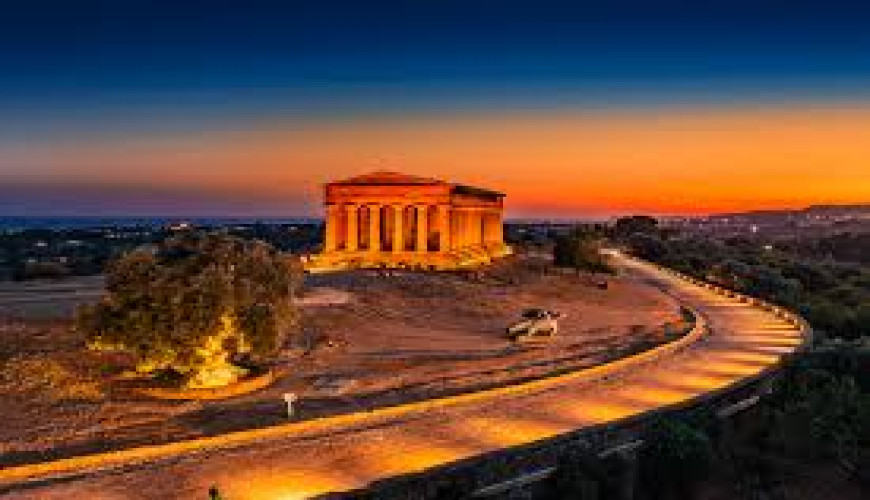
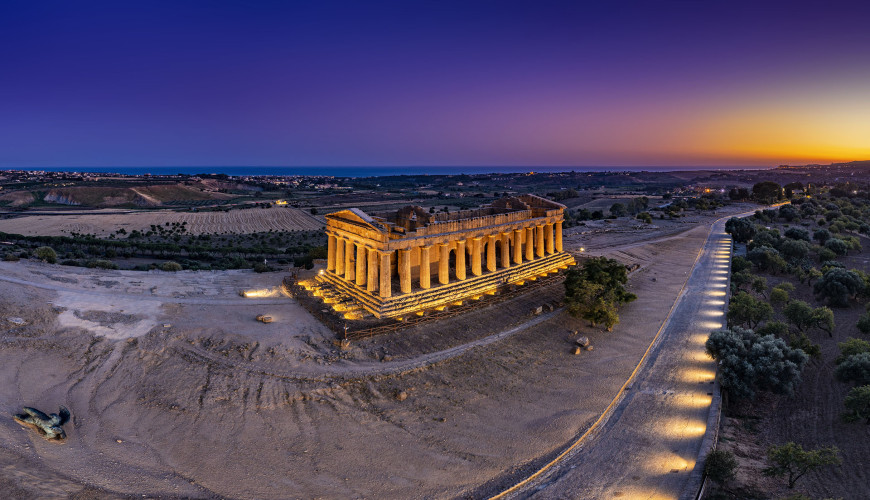
It can be different every time: visits with children, night tours, slow walks, photography moments — depending on your experience.
It leaves a memory: many visitors return with the awareness of having seen — more than ruins — a tangible and powerful piece of the past.
Today, the Valley is a symbol of identity, beauty, and memory, representing one of the most extraordinary historical and artistic heritages of Sicily.
Advantages of Choosing TDS Transfer for the Valley of the Temples
Convenience and departure from your area — TDS Transfer offers excursions/transfers from San Vito lo Capo or Custonaci to the Valley of the Temples.
No driving or parking stress — Reaching Agrigento by car, finding parking, and managing traffic or public transport can be complicated. A dedicated transfer saves energy, time, and worries.
Complete organization — travel + transportation + comfort. With TDS, you have a vehicle and driver, departing “directly” without worrying about trains, buses, or roads.
Ideal if you are in Custonaci / San Vito lo Capo — The service is tailored to your location, minimizing initial travel before heading to Agrigento.
Flexibility — group or private tours: depending on your group size and preferences, choose collective or private tours for more freedom.
Time-saving — direct transfers + comfortable arrival = more time for the visit without transport worries.
Choosing TDS Transfer ensures a stress-free trip: you can focus on the Valley of the Temples, with comfort and organization all handled.
21 Things to See in Agrigento
1–10 | Ancient History and Valley of the Temples
Valley of the Temples – Sicily’s most famous archaeological site, UNESCO heritage.
Temple of Concordia – best-preserved Doric temple in the area.
Temple of Juno (Hera) – beautiful panoramic viewpoint.
Temple of Hercules – one of the oldest temples.
Temple of Olympian Zeus – one of the largest ancient temples.
Temple of the Dioscuri – iconic symbol of the city.
Garden of the Kolymbethra – natural oasis with citrus groves.
Paleochristian Necropolises – religious and archaeological evidence.
Porta V – ancient monumental gate.
Ancient Walls of Akragas – remains of fortifications.
11–15 | Historic Center and Culture
11. Via Atenea – main street with palaces and shops.
12. Cathedral of San Gerlando – medieval monument.
13. Church of Santa Maria dei Greci – built over an ancient Greek temple.
14. San Nicola Quarter – historic streets and views.
15. Monastery of Santo Spirito – famous medieval convent.
16–18 | Museums and Cultural Sites
16. Regional Archaeological Museum Pietro Griffo – history of Akragas.
17. Birthplace of Luigi Pirandello – museum dedicated to the writer.
18. Pirandello Theater – historic theater in the city center.
19–21 | Nature, Sea, and Views
19. Scala dei Turchi – unique white cliff of the Agrigento coast.
20. San Leone Beach – most popular seaside area.
21. Torre Salsa Nature Reserve – protected dunes, beaches, and landscapes.
20 Must-Try Foods in Agrigento
- Fish couscous – with Arab influences, fresh fish, rich broth.
- Pasta with sardines – sardines, wild fennel, raisins, pine nuts.
- Agrigento caponata – sweet-sour vegetable mix.
- Sicilian pecorino – locally produced cheese.
- Grilled octopus – coastal specialty.
- Squid ink pasta – local seafood favorite.
- Red Sicilian shrimp – raw, marinated, or seared.
- Arancina with ragù – large stuffed rice balls.
- Arancina with pistachio – Sicilian favorite variant.
- Pane cunzato – bread with oil, tomato, cheese, anchovies.
- Sarde a beccafico – sardines stuffed with breadcrumbs, raisins, pine nuts.
- Swordfish rolls – baked, aromatic, soft filling.
- Sicilian cassata – colorful ricotta dessert with candied fruit.
- Sicilian cannolo – fresh ricotta pastry.
- Almond pastries – soft, fragrant, Sicilian almonds.
- Granita with brioche – almond, lemon, or mulberry flavor.
- Fava bean puree (Macco di fave) – ancient peasant dish.
- Stigghiola – grilled lamb intestines, local street food.
- Panelle and crocché – simple and irresistible street food.
- Wine from the Valley of the Temples – Nero d’Avola, Inzolia, Catarratto, Grillo.
If you want to rent a car at Palermo, Catania, or Trapani-Birgi airport, or in any other location in Sicily where you are, click on this link https://www.tdsrent.it
If you want to arrange a transfer from one of the main airports in Sicily or from anywhere else on the island, click here https://www.tdstransfer.it
Frequently Asked Questions about the Valley of the Temples
What are the opening hours of the Valley of the Temples?
The Valley of the Temples is open every day of the year. Generally, the archaeological park opens in the morning and closes at sunset, with opening hours that may vary depending on the season. It is recommended to check the updated hours before visiting.
How much time is needed to visit the Valley of the Temples?
For a complete visit to the Valley of the Temples, 2 to 3 hours are recommended. Those who wish to explore the site in more depth or join a guided tour may dedicate up to half a day.
How can you reach the Valley of the Temples from San Vito lo Capo?
You can conveniently reach the Valley of the Temples using a private or shared transfer service. TDS Transfer offers direct connections from San Vito lo Capo and other Sicilian locations, ideal for those who want to travel stress-free.
What is the best time to visit the Valley of the Temples?
The best times to visit the Valley of the Temples are spring and autumn, when the climate is mild and tourist crowds are smaller. Summer evening visits also offer a particularly evocative experience.
Discover other destinations and excursions in Sicily
If you are planning your trip to Sicily, also discover other must-see destinations easily reachable with TDS Transfer services: