
The most important patron saint festivals in Sicily: history and traditions
Between devotion and spectacle, Sicily comes alive with emotions, colors, and traditions that span the centuries.

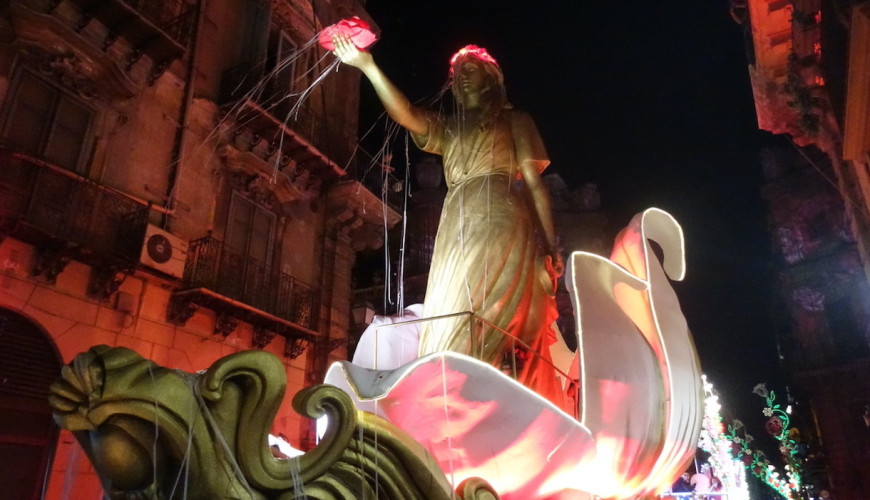
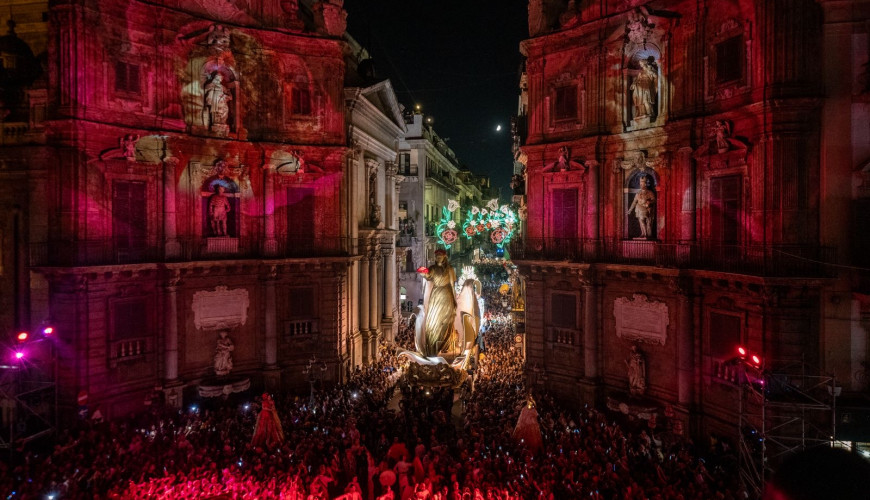
The most important patron festivals of Sicily: history and traditions
Sicily, a land of faith, history and folklore, celebrates numerous patron festivals throughout the year that blend religious devotion, popular culture and spectacular events. Every town and village has its own patron saint, and the celebrations often combine processions, traditional rites, music, street markets and local dishes.
1. Feast of the Madonna of Custonaci
Festival of the Madonna of Custonaci – History, traditions and typical program
The Festival of the Madonna of Custonaci is one of the oldest and most heartfelt Marian celebrations in western Sicily. It takes place every year in Custonaci, in the province of Trapani, during the last week of August, featuring a sequence of religious rites, popular traditions, performances and cultural events.
History of the Landing (Lo Sbarco) of the Madonna of Custonaci
The Landing of the Madonna of Custonaci has its roots in an ancient popular tradition that links faith, the sea and local history. It is connected with the miraculous arrival of the sacred image of the Madonna, which according to legend occurred several centuries ago, probably between the 1400s and the 1500s, a time when many merchant ships sailed along the Sicilian coasts.
The legend: the storm and the vow to the Madonna
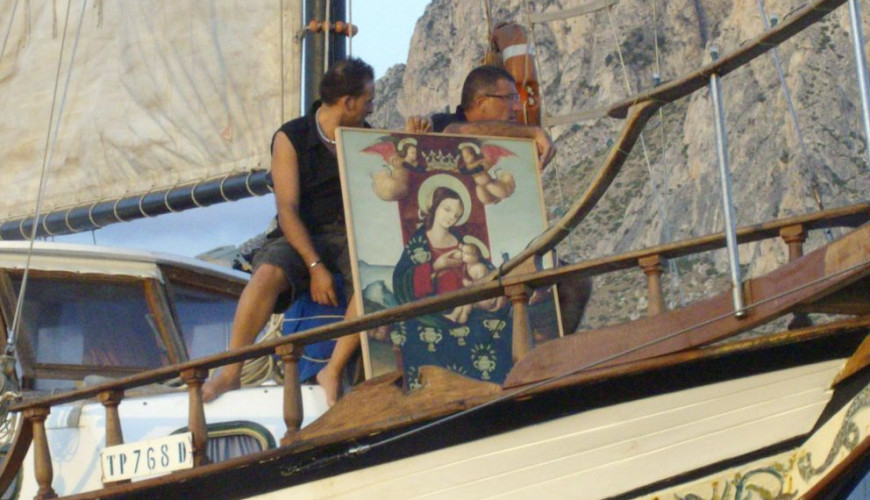
According to the story passed down locally, a ship — said to be coming from the western Mediterranean and heading north, perhaps toward France — was caught in a violent storm off the bay of Cornino (Cala Bukuto). The sea grew so rough the hull threatened to break. Fearing for their lives, the sailors made a vow to the Madonna, promising that if they were saved they would give the sacred image they carried on board to the community that welcomed them. After invoking the Virgin, the vessel, according to tradition, miraculously regained control and found refuge along the coast of Cornino, the bay that today hosts the spectacular reenactment.
The arrival of the sacred image
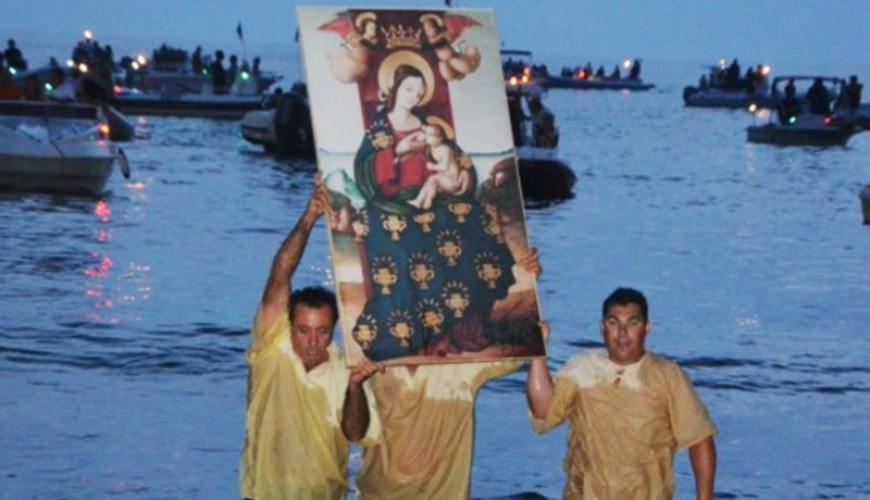
Once ashore, the sailors kept their vow: they handed over a painted panel showing the Madonna and Child, a late-medieval style work that later became the venerated Maria Santissima of Custonaci. The townspeople received the image with deep devotion and decided to preserve it in a sacred place. Thus the local Marian devotion was born and, over time, the famous Sanctuary of Maria SS. of Custonaci was established, now the spiritual center of the area.
From miracle to tradition
For centuries the memory of this event was passed on orally and celebrated with prayers, pilgrimages and popular festivities. Over time the community turned the recollection into a public reenactment, which became a central part of the patronal celebration.
The modern reenactment keeps alive:
- the moment of the landing,
- the carrying of the sacred image,
- the entrusting of the town to the Madonna.
The reenactment today
Still today, each year on the Monday of the last week of August, the bay of Cornino seems to travel back in time through a moving portrayal:
The historic sailing ship
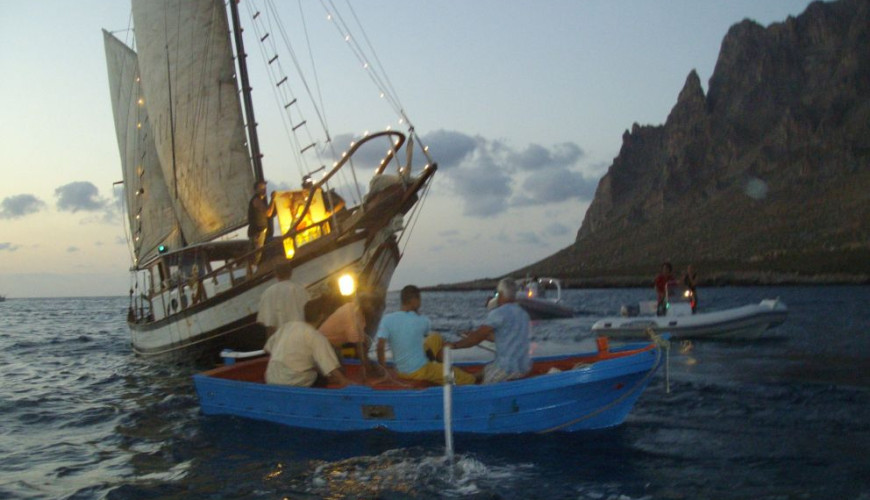
An old vessel slowly approaches the shore, just like the legendary ship of the rescued sailors. On board is a copy of the sacred image.
The sailors and the actors
Costumed performers recreate the vow, the storm, the despair and finally the deliverance.
The landing on the beach
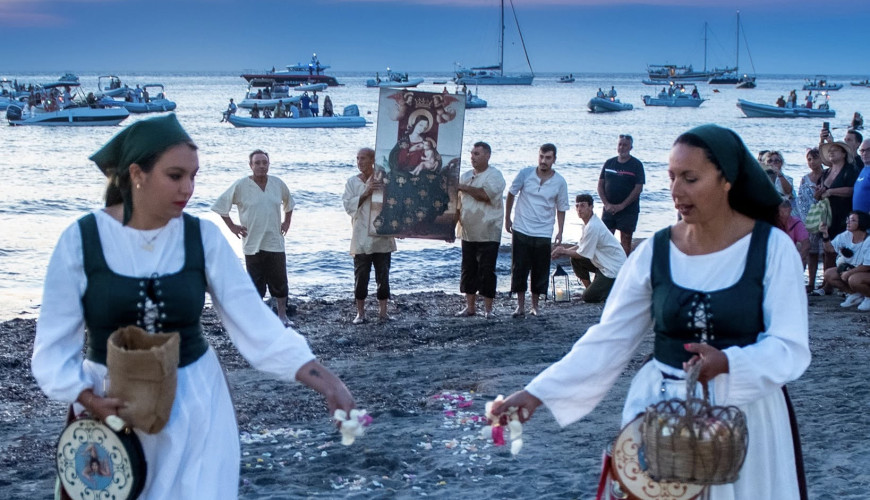
The panel of the Madonna is symbolically brought to land and received by the faithful, the clergy and local maritime groups.
The procession toward the sanctuary
From the bay the image begins a suggestive procession, accompanied by torches, religious songs, prayers, lit boats and hundreds of people escorting the Madonna along the route.
- Fireworks and celebration
The evening ends with a fireworks display over the sea, symbolizing the Madonna’s light guiding the faithful through the storm.
- Meaning of the Landing
The Landing is not just a reenactment: it is the living memory of a people who have seen the Madonna as a guide, protector and hope in difficult times.
It represents:
- the deep relationship between Custonaci and the sea,
- gratitude for an event deemed miraculous,
- continuity between past and present,
- the religious and cultural identity of the community.
Why choose TDS Transfer to go to the Festival of the Madonna of Custonaci
The Festival of the Madonna of Custonaci is one of the most moving events in Sicily. To enjoy it worry-free, TDS Transfer is the ideal solution. Here are the main reasons:
Arrive directly close to the festival
During the festival days traffic is heavy and many access points are closed. With TDS you are brought to the most convenient locations near the event, avoiding long walks and uncertain parking.
No stress from driving or parking
The festival draws thousands of people, especially during the Landing and the main procession. With TDS you don’t have to worry about driving, finding a parking space or navigating crowded roads: you simply get in and enjoy the day.
Flexible schedules tailored to the main events
Key moments often take place in the evening or at night. TDS offers transfers at the times you need, so you can attend the reenactment, religious services and performances without hurry or constraints.
Drivers who know the area
Drivers know Custonaci well and the alternate routes to use on the busiest days. This means faster transfers, strategic drop-offs and less time wasted in traffic.
Perfect for families and groups
If you’re traveling with children, elderly relatives or friends, TDS lets you move together comfortably. It’s the best choice to avoid multiple cars or complicated logistics.
Safe returns after late events
Many events finish late and roads can be chaotic. With TDS you return to your home, hotel or apartment in complete peace of mind, entrusting yourself to a professional driver.
Enjoy the festival without worries
With TDS you don’t have to think about logistics: you can focus only on the magic of the festival, the traditions, the lights and the unique atmosphere of Custonaci.
2. Feast of Saint Agatha in Catania: history, traditions and celebrations
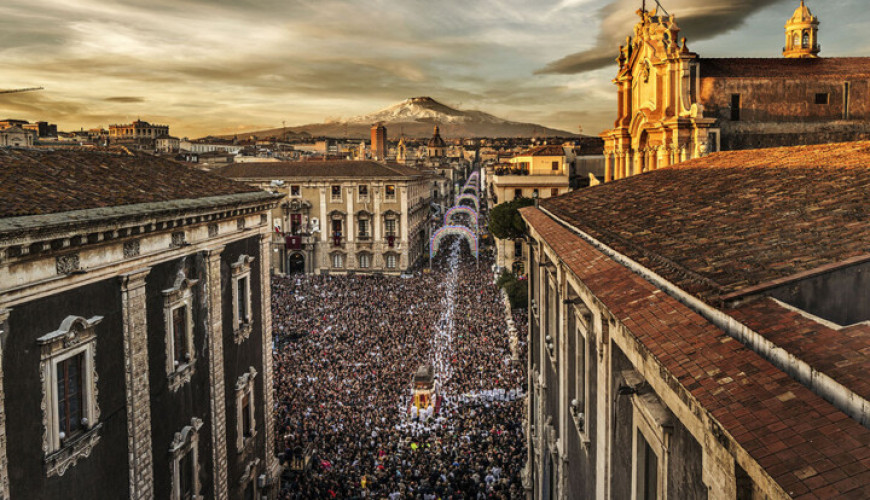
The Feast of Saint Agatha, patron saint of Catania, is one of the most important and evocative religious celebrations in Sicily. Every year, from February 3 to 5, the city becomes a stage for faith, art and popular tradition, drawing thousands of devotees and tourists from across the island and the world.
History of the feast
Devotion to Saint Agatha dates back to the 3rd century, when the young Christian martyr suffered martyrdom in Catania during Roman persecutions. According to tradition, Agatha was tortured and killed for her faith, and her figure became a symbol of courage, purity and protection for the city. The celebration has ancient origins that have developed over the centuries, combining religious rites, solemn processions and moments of popular spectacle, making it one of Italy’s best-known religious events.
Main celebrations
February 3 – Translation of the relics: the relics of Saint Agatha are carried in procession from the Cathedral of Catania through the historic center, accompanied by devotees, confraternities and bands. This marks the official start of the feast.
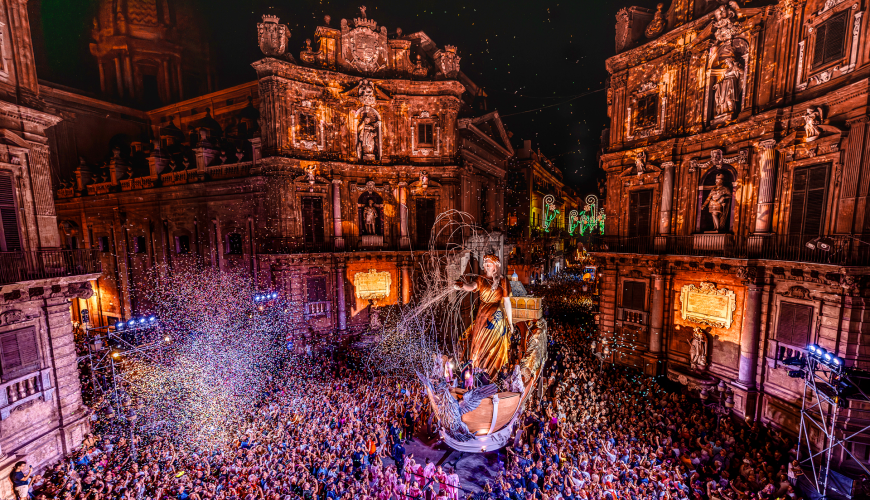
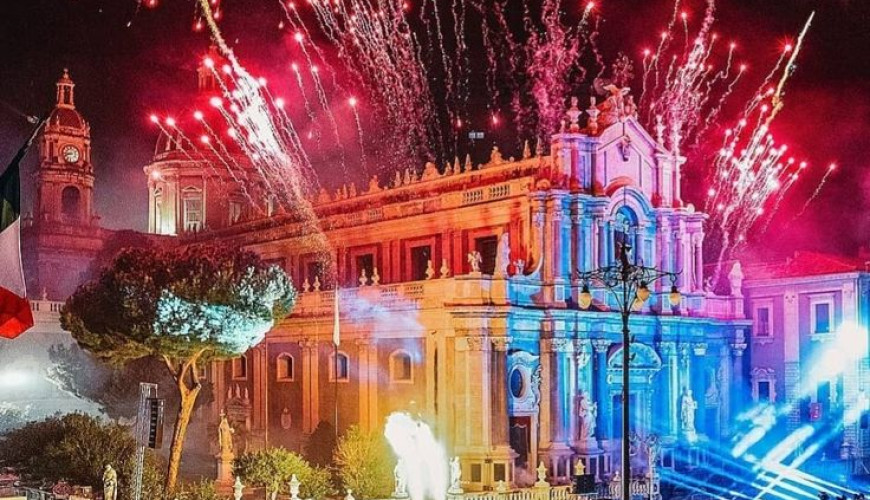
February 4 – Main procession: the city comes alive with the grand procession of the Vara of Saint Agatha, a tall structure that holds the relics and is carried on the shoulders of the devout. The procession crosses the main streets amid fireworks, religious songs and spectacular illuminations.
February 5 – Liturgical celebrations and closing: the feast culminates with the solemn Mass in the Cathedral and the return of the relics to the church. The day is accompanied by popular events, shows and typical markets.
Traditions and customs
The Vara of Saint Agatha: a structure carried on the shoulders of the devout, symbolizing the city’s devotion.
Fireworks and illuminations: lighting up Catania’s streets and creating a magical atmosphere.
Traditional foods: sweets such as “minne di Sant’Agata”, small almond-paste pastries prepared especially for the feast.
Community participation: confraternities, families and citizens actively take part in preparing the feast, carrying the Vara and celebrating religious rites.
Cultural and religious significance
The Feast of Saint Agatha is not only a religious event but also a deep bond between the city, its history and its traditions. Each year the celebration unites spirituality, art, popular culture and a sense of community, giving visitors an authentic experience of Sicily.
3. Feast of Saint Rosalia in Palermo: history, traditions and celebrations
The Feast of Saint Rosalia, patron saint of Palermo, is among Sicily’s most important and evocative religious events. Every year, from July 10 to 15, the city honors its protector with solemn processions, religious rites, popular performances and fireworks.
History of the feast
Saint Rosalia, known as “La Santuzza,” lived in the 12th century and chose to retire as a hermit on Monte Pellegrino. Her figure became famous in 1624 during a severe plague in Palermo, when carrying her relics in procession was followed by the city’s miraculous deliverance. Since then, popular devotion has made the Feast of Saint Rosalia an annual celebration that unites religiosity, civic identity and popular tradition.
Main celebrations
The festivities begin with the novena and solemn Masses, accompanied by music and prayers.
The most moving moment is the procession of the Vara of Saint Rosalia, a large structure that carries the saint’s relics from the Sanctuary of Santa Rosalia on Monte Pellegrino into the city, passing through central streets to the accompaniment of devotional songs, bands and thousands of faithful.
The return of the Vara to the sanctuary closes the celebrations, while the city is lit by spectacular fireworks, music and popular festivities.
Traditions and custom
The Vara of Saint Rosalia, carried on the shoulders of devotees, symbolizes the city’s protection and popular devotion.
Fireworks and illuminations create visually spectacular celebrations.
Traditional foods and street food are enjoyed during the festival.
Widespread civic participation: families, confraternities and citizens actively take part in preparations, processions and religious events, creating a community atmosphere.
Cultural and religious significance
The Feast of Saint Rosalia is more than a ritual: it is a symbol of identity and belonging for Palermo, blending spirituality, history, popular culture and community pride to offer participants a unique, immersive experience.
4. Feast of Saint George in Ragusa: history, traditions and celebrations
The Feast of Saint George, patron of Ragusa Ibla, is one of the most important religious celebrations in the province of Ragusa. It is held each year on April 23, the saint’s feast day, and combines faith, culture and popular tradition.
History of the feast
Saint George, the warrior saint, has been venerated in Ragusa for centuries. Devotion likely arose in the Middle Ages, when local communities sought protection against natural disasters and enemies. Over time the festival became established as a religious and cultural event, a symbol of civic identity and communal participation.
Main celebrations
Religious procession: the statue of Saint George is carried through the historic center accompanied by faithful, confraternities and bands.
Solemn Mass: liturgical celebrations are held in the church dedicated to the saint with participation from citizens and local officials.
Popular events: concerts, shows and local market stalls add a folkloric dimension to the feast.
Traditions and customs
The statue is carried on the shoulders of devotees as a sign of devotion and protection.
Votive rites: citizens offer candles, prayers and gifts in thanks for graces received.
Music and folklore: bands, songs and traditional dances accompany the procession, making the occasion engaging for visitors.
Cultural and religious significance
The Feast of Saint George is more than a religious rite: it is a moment of social cohesion and cultural identity for Ragusa, reflecting the city’s history and the community’s attachment to its religious and popular traditions.
5. Feast of Saint Calogero: history, traditions and celebrations in Sicily
The Feast of Saint Calogero is one of the most heartfelt celebrations in western Sicily, especially in Sciacca, Termini Imerese and Agrigento, drawing thousands of devotees and visitors each year. It is generally observed on June 18 to commemorate the saint’s death, though in some places the celebration can extend over several days with religious and folkloric events.
History of the saint
Saint Calogero, also called “the Hermit Saint,” lived in the 4th–5th century and was revered for his ascetic life and miracles attributed to his intercession. He is considered a protector against illness, calamities and daily hardships. Veneration of the saint grew over the centuries, particularly in western Sicilian towns where many pilgrims visit the sanctuaries dedicated to him.
Main celebrations
Religious procession: the statue of Saint Calogero is carried through the historic center, accompanied by faithful and local confraternities.
Solemn Mass and liturgical rites: celebrations in the church or sanctuary include prayers and blessings for pilgrims.
Popular festivities: markets, concerts and folkloric performances enliven the town during the feast.
Traditions and customs
Pilgrimages: devotees walk long distances on foot to reach the sanctuary as an act of devotion.
Votive offerings: leaving ex-votos, candles or gifts as thanks for graces received.
Music and folklore: bands and religious songs accompany the procession, creating a special atmosphere that mixes spirituality and popular tradition.
Cultural and religious significance
The Feast of Saint Calogero blends religious devotion and popular culture, acting as a moment of community gathering and identity. The rites and processions are a historical and cultural heritage that tell the story of Sicilian towns and their centuries-old faith.
6. Feast of Saint Lucy in Syracuse: history, traditions and celebrations
The Feast of Saint Lucy in Syracuse is one of Sicily’s most important and evocative religious events, celebrated each year on December 13 in honor of the city’s patron saint, Saint Lucy, protector of the sight. The celebration draws thousands of devotees, pilgrims and tourists wishing to experience Syracuse’s spiritual and popular traditions.
History of the feast
Saint Lucy was born in Syracuse in the 3rd century and became a Christian martyr during Roman persecutions. Her cult has been strong ever since, with traditions claiming she protected the city from epidemics and misfortune. The festival takes place in the historic center, especially in Ortigia where the church dedicated to Saint Lucy is the focal point of celebrations.
Main celebrations
Procession of the saint: the statue of Saint Lucy is carried through Syracuse’s streets with faithful, confraternities and bands.
Solemn Mass and religious rites: Masses are celebrated in the church of Saint Lucy with prayers for protection and healing, particularly for eyesight.
Traditional sweets: treats such as cucciddati (pastries filled with dried fruit and spices) are prepared and offered during the feast.
Fireworks and popular events: some areas organize shows and festivities to accompany the religious ceremonies.
Cultural and religious significance
The Feast of Saint Lucy is a moment of deep devotion and communal unity for Syracuse, an occasion to rediscover the city’s history, religious traditions and the bond between the sacred and everyday life.
7. Feast of Saints Peter and Paul in Petralia Sottana: history and traditions
The Feast of Saints Peter and Paul is one of Petralia Sottana’s major religious celebrations. This medieval village in the Madonie (province of Palermo) honors its patron saints each year on June 29, a day of faith, protection and devotion.
History of the feast
Petralia Sottana’s devotion to Saints Peter and Paul goes back centuries. The celebration blends religious and civil rites that unite spirituality, folklore and collective identity. The two apostles symbolize spiritual guidance and the community’s protection against life’s hardships.
Main celebrations
Religious procession: the statues of the saints are carried through the historic center accompanied by faithful, confraternities and local bands.
Liturgical celebrations: solemn Masses and moments of prayer take place in the main church.
Popular events: cultural shows, concerts and stalls selling local products let visitors fully experience local tradition.
Cultural and religious significance
The feast is a social gathering that helps rediscover Petralia Sottana’s cultural and historical roots, strengthening the ties between community, faith and tradition.
8. Feast of Saint Michael the Archangel in Caltanissetta: history and traditions
The Feast of Saint Michael the Archangel in Caltanissetta is one of the province’s most important religious events, celebrated with great devotion on September 29, the saint’s feast day.
History of the feast
Saint Michael is a highly venerated figure in Christianity, symbolizing protection and spiritual guidance. Devotion to Saint Michael in Caltanissetta dates back centuries and has become a cornerstone of local religious life.
Main celebrations
Procession: the statue of Saint Michael the Archangel is carried through the city, accompanied by faithful, confraternities and musical bands.
Religious rites: solemn Masses and public prayers are celebrated in the main churches.
Cultural and folkloric events: markets, folk shows and cultural initiatives allow visitors to discover local crafts, cuisine and traditions.
Cultural and religious significance
The feast represents a moment of social and spiritual cohesion for the city, preserving ancient religious and popular practices and reinforcing Caltanissetta’s cultural identity.
9. Feast of Saint Vitus in Mazara del Vallo: history and traditions
The Feast of Saint Vitus Martyr is one of the most heartfelt celebrations in Mazara del Vallo (province of Trapani). It is observed each year on June 15 and represents a moment of strong devotion for the local community.
History of the feast
Saint Vitus is considered protector of young people and the sick; his veneration in Mazara del Vallo has ancient roots. The feast has maintained a close bond with local religious and popular traditions over the centuries.
Main celebrations
Procession of the saint: the statue of Saint Vitus is carried through the historic center, accompanied by prayers, sacred songs and illuminated streets.
Religious rites: solemn Masses in main churches underline the feast’s spiritual importance.
Popular events: markets, shows and cultural activities let visitors discover local crafts and traditions.
Cultural and religious significance
The feast of Saint Vitus blends faith, culture and local identity, reinforcing community bonds and transmitting popular religious traditions.
10. Feast of Saint John the Baptist in Ragusa: history and traditions
The Feast of Saint John the Baptist, patron of Ragusa, is one of the most important and widely felt celebrations in the area. It is held each year on June 24 and draws strong participation from citizens and visitors.
History of the feast
Saint John the Baptist, a central figure in Christianity, has been venerated in Ragusa for centuries. The festival combines religious rites with folklore and cultural events that highlight the city’s baroque architecture.
Main celebrations
Procession: the statue of Saint John the Baptist is carried through the historic center, accompanied by confraternities, faithful and bands, with illuminations that enhance the city’s architecture.
Religious rites: solemn Masses and prayers are celebrated in principal churches.
Popular events: markets, shows and cultural initiatives allow visitors to explore local craftsmanship and traditions.
Cultural and religious significance
The feast is a time of religious identity and cultural celebration that makes Ragusa’s observance unique and memorable.
11. Feast of the Madonna della Lettera in Messina: history and traditions
The Madonna della Lettera is the patroness of Messina, and her feast on June 3 is one of Sicily’s most heartfelt and spectacular religious events.
History of the feast
Devotion to the Madonna della Lettera originates in 1598, when, according to tradition, the Virgin Mary sent a letter to the people of Messina to protect them. Since then she has been venerated as the city’s protector and a symbol of faith and unity.
Main celebrations
Procession: the statue of the Madonna della Lettera is carried through the main streets with religious songs, fireworks and illuminations.
Religious rites: solemn Masses, prayers and blessings are celebrated in the Cathedral of Messina, where the statue is kept during the year.
Cultural events: concerts, exhibitions and initiatives showcase local crafts and traditions.
Cultural and religious significance
The feast is a powerful expression of Messina’s religious and cultural identity, combining sacred rites with popular festivities.
12. Feast of Saint Roch in Scicli: history and traditions
The Feast of Saint Roch in Scicli (province of Ragusa) is a major religious celebration held in August, featuring religious rites, processions and folkloric events that draw visitors from across Sicily.
History of the feast
Saint Roch is venerated as protector against illness and plague. Devotion in Scicli dates back centuries, with the festival becoming an important expression of civic and religious identity.
Main celebrations
Procession: the statue of Saint Roch is carried through principal streets, accompanied by sacred music and fireworks.
Religious rites: solemn Masses in the church dedicated to Saint Roch.
Popular events: concerts, shows and cultural initiatives enliven the town.
Cultural and religious significance
The feast is a deep expression of community devotion and tradition, mixing spirituality with popular celebration.
13. Feast of Saint Joseph in Salemi: history and traditions
The Feast of Saint Joseph in Salemi (province of Trapani) is celebrated annually on March 19 and is one of the town’s most important popular devotions, honoring Saint Joseph, patron of workers and protector of families.
History of the feast
Devotion to Saint Joseph is rooted in agrarian cycles and family life; the festival features altars, processions and culinary traditions tied to local produce and harvests.
Main celebrations
Altars of Saint Joseph: families set up richly decorated altars with food, sweets and seasonal fruits as offerings.
Procession: the statue of Saint Joseph is carried through the historic center amid hymns and traditional music.
Culinary and folkloric celebrations: preparations include typical sweets like cuddureddi and dishes based on local products.
Cultural and religious significance
The feast is a moment of social gathering, devotion and celebration of local traditions and craftsmanship.
14. Feast of the Madonna del Soccorso in Sciacca: history and traditions
The Feast of the Madonna del Soccorso in Sciacca (province of Agrigento) is celebrated each year on May 1 and honors the town’s protector with processions, popular devotion and cultural events that attract thousands of visitors.
History of the feast
Devotion to Our Lady of Succor dates back to the 15th century, when the population attributed several miraculous interventions to the Virgin, especially during storms or epidemics. Over time the celebration became central to Sciacca’s religious and social life.
Main celebrations
Procession: the statue of the Madonna del Soccorso is carried through the historic center with religious songs and bands.
Solemn Mass and rites: the liturgical heart of the feast is found in church services and blessings for pilgrims.
Cultural events: shows, markets and initiatives highlight local art, cuisine and tradition.
Cultural and religious significance
The feast unites civic devotion and cultural identity, making it an important moment for Sciacca’s community life.
15. Feast of Saint Alfio in Trecastagni: history and traditions
The Feast of Saint Alfio, celebrated in Trecastagni (province of Catania) on May 10, honors the martyr saints Alfio, Filadelfo and Cirino and attracts devotees from across the region.
History of the feast
The devotion dates back to medieval times and has been preserved through centuries of religious observance.
Main celebrations
Procession: the statues of the three saints are carried through town accompanied by bands and religious hymns.
Liturgical rites and solemn Masses: key moments of spiritual reflection and prayer.
Folkloric and cultural events: shows, markets and gastronomic events enliven the streets.
Cultural and religious significance
The feast reinforces community bonds and the local memory of martyrdom and devotion, blending sacred ritual with popular celebration.
16. Feast of the Most Holy Crucifix of Enna: history and traditions
The Feast of the Most Holy Crucifix is Enna’s most important religious celebration, symbolizing devotion and civic identity. It is held annually on the Friday before the third Sunday of September and attracts thousands of faithful and visitors from all over Sicily.
Origins and meaning
The cult of the Crucifix dates to the 15th century, when the crucifix—considered miraculous—began to be venerated. Numerous miracles and healings are traditionally attributed to its intercession. The feast is therefore a time of deep devotion expressed through prayers, processions and customary rites.
Main celebrations
The central moment is the procession of the Crucifix through the main streets of the historic center. The statue, placed on a fercolo, is carried on devotees’ shoulders amid sacred songs, prayers and band music.
Other events include solemn liturgical functions, votive offerings to support the statue’s care, and cultural and folkloric programs such as concerts that enrich the religious programme.
Key locations
The festival revolves around the Mother Church of Enna, where the Crucifix is kept year-round. The processional route winds through medieval streets and squares, creating a dramatic backdrop of monuments and historic views.
What makes the feast unique
The Feast of the Most Holy Crucifix merges faith, history and community. It not only strengthens civic ties but also attracts cultural and spiritual interest from visitors, offering immersion in ancient Sicilian religious traditions.
17. Feast of Saint Lawrence in Sant’Agata di Militello: history and traditions
The Feast of Saint Lawrence in Sant’Agata di Militello (province of Messina) is celebrated each year on August 10. It is a heartfelt moment of devotion, sociality and popular culture for the local community.
Origins and meaning
Veneration of Saint Lawrence dates to the medieval period. In Sant’Agata di Militello the feast combines religious observance with local customs and summer celebrations.
Main celebrations
Procession: the statue of Saint Lawrence is carried through the historic streets accompanied by prayers and hymns.
Solemn Masses and votive offerings: citizens express gratitude through offerings and devotions.
Cultural events: illuminations, concerts and shows animate the summer evenings.
Cultural and religious significance
The feast offers a vivid way to experience Sicilian devotional tradition, combining sacred rites with community festivity.
18. Feast of Our Lady of Grace in Mirabella Imbaccari: history and traditions
The Feast of Our Lady of Grace in Mirabella Imbaccari is a deeply felt local celebration dedicated to the Virgin as protector of the town. The devotion has centuries-old roots and is closely tied to the village’s history.
Church and architecture
The main church dedicated to Our Lady of Grace was built in the first half of the 17th century and, after the 1693 earthquake, was restored and enlarged between 1737 and 1749 into its present three-nave form, with a Baroque façade and rich internal decorations that reflect Sicilian sacred art.
Celebration of the feast
The patronal feast usually culminates on the last Sunday of August with processions of the Madonna’s simulacrum through the streets, accompanied by prayers and hymns. The celebration also includes illuminations, shows and moments of communal sociability.
Cultural and social value
The feast not only expresses devotion but also showcases Mirabella Imbaccari’s historic center, artisanal tradition and local culture. Participating offers a chance to immerse in centuries of history, sacred art and popular customs in eastern Sicily.
19. Palazzolo Acreide: one of the most spectacular patronal festivals in all of Sicily
The town of Palazzolo Acreide, in the heart of the Iblean Mountains, is famous for its centuries-old traditions, especially the patronal festivals dedicated to Saint Paul and Saint Sebastian. These events attract thousands of visitors every year for their intensity, popular folklore, fireworks displays, and the deep connection with local devotion.
-1. The Patron Saints of Palazzolo Acreide
Palazzolo Acreide has two patron saints, celebrated at different times of the year:
Saint Paul the Apostle – 29 June (main feast)
It is the most anticipated and attended festival. Saint Paul is considered the protector against snakes and illnesses.
Saint Sebastian – 10 August
Famous for its pyrotechnic tradition and the participation of devotees.
-2. The Feast of Saint Paul (29 June) – The most important
Procession and the exit of the statue
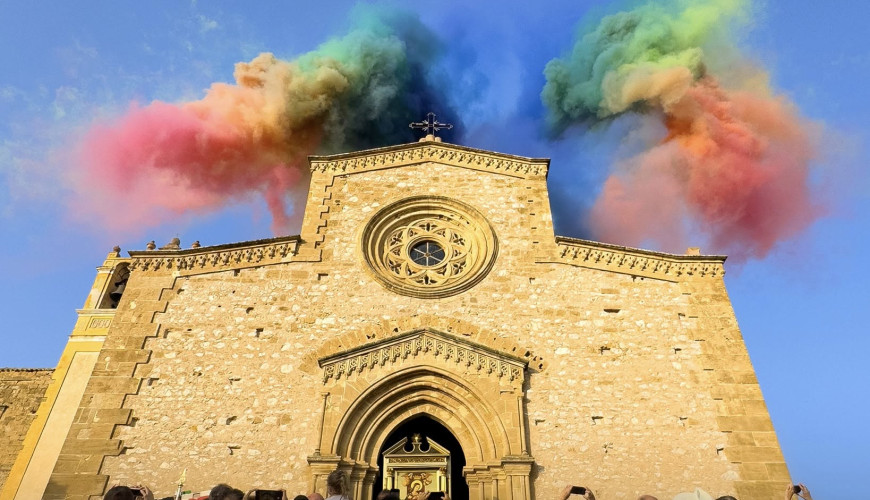
The most emotional moment is the exit of Saint Paul’s statue from the Basilica, greeted by an explosion of thousands of “nzareddi” (colored paper strips).
The crowd acclaims with the traditional shout: “Evviva Santu Paulu!”
The “miracles” of the snakes
A unique tradition:
Devotees carry live snakes as a sign of protection, recalling the miracles attributed to Saint Paul.
The procession through the historic center
The richly decorated fercolo passes through:
the medieval quarter
the baroque streets
Piazza del Popolo
Corso Vittorio Emanuele
Fireworks
Spectacular, both day and night, among the most impressive on the island.
Popular devotion
The festival is considered one of the most heartfelt and attended in all of eastern Sicily.
- 3. The Feast of Saint Sebastian (10 August)
An equally important summer event, known for:
The exit of the statue
Accompanied by a scenographic rain of colored paper strips and the music of the marching band.
The “Sciuta” and the run of the carriers
The statue is run through the main streets, creating strong emotional involvement.
Fireworks
Among the most anticipated, with displays that illuminate the entire Iblean valley.
The market and fair
A centuries-old tradition attracting visitors from the whole province of Syracuse.
- 4. Historical origins of the festivals
The first documented celebrations date back to the 17th century.
The cult of Saint Paul is linked to the ancient Christian roots of the Iblean area, while that of Saint Sebastian is connected to devotion to the martyrs.
Palazzolo, a UNESCO World Heritage city (for its Baroque architecture), has always been an important cultural center: the festivals reflect this historical richness.
- 5. Folklore, traditions and symbols
✔ Marching bands
✔ Bearers dressed in white shirts and red sashes
✔ Colorful nzareddi filling the squares
✔ Decorations, lights and scenic arches
✔ Street vendors and typical Iblean products
- 6. Typical gastronomy during the festival
Palazzolo sausage
Cavatieddi with local sauces
Cannoli and Iblean pastries
Fresh ricotta
Seasoned bread and dairy products
During the festival days, the historic center is filled with traditional aromas and flavors.
20. Feast of Our Lady of Grace in Alcamo: history and traditions
The Feast of Our Lady of Grace in Alcamo (province of Trapani) is one of the town’s most heartfelt religious events, honoring the Virgin Mary as the community’s patroness.
Origins and celebrations
Traditionally observed in July, the feast features solemn religious functions and the procession of the Madonna’s simulacrum through the historic center. The faithful accompany the image with prayers, hymns and active participation.
Popular events
Alongside religious rites, the celebration includes illuminations, performances, market stalls and communal meals that animate the town squares, offering a full and engaging experience for residents and visitors.
Cultural and social value
The feast is an occasion to rediscover local craftsmanship, history and architecture, strengthening civic identity and preserving religious and cultural heritage in western Sicily.
Why choose TDS Transfer for your journeys
Choosing TDS Transfer means relying on a professional, comfortable service designed for travelers who want to travel stress-free. Here are the main reasons:
Total door-to-door convenience
TDS picks you up exactly where you are — home, hotel, airport or port — and takes you directly to your destination without transfers, waits or surprises. It’s ideal for a smooth, well-organized journey.
Absolute punctuality and reliability
Drivers are professionals who ensure timeliness, especially for sensitive transfers such as flight arrivals and departures. With TDS you can expect a safe, calm trip without delays.
Perfect for travelers with luggage or in groups
Vehicles are comfortable and roomy, designed to carry suitcases, equipment or families. No lugging baggage or crowded public transport: just get in and relax.
Maximum flexibility
You choose departure times and places. You don’t have to adapt to fixed bus or train schedules. TDS adjusts to your needs, even at inconvenient hours.
Ideal for those who want to discover Sicily
Beyond standard transfers, TDS offers tailor-made services to visit Sicily’s most beautiful sites: beaches, villages, nature reserves and cities of art. Perfect if you want to enjoy excursions without driving or searching for parking.
Comfort, safety and customer care
Each trip is designed to guarantee relaxation, cleanliness, comfort and attentive driving. Customer care is central: the goal is to bring you to your destination as pleasantly as possible.
If you want to rent a car, wherever you are in Sicily, click here www.tdsrent.it
If you want to arrange a transfer from one of the main airports in Sicily or from anywhere else on the island, click here www.tdstransfer.it